Rachmaninoff & Mendelssohn

By Sam Miller | September 1, 2026

Rachmaninoff’s All-Night Vigil: “Vespers”

Composed in 1915, this a cappella (only with voices) work is considered by some to be his greatest composition. “Vespers” is composed of liturgical prayers taken directly from Eastern Orthodox tradition. In fact, the verses sung are not in standard Russian, but instead in “Church Slavonic,” which is the “liturgical language for all non-Greek [Orthodox] churches” (“What to Listen For”). Rachmaninoff spent considerable time and effort studying the Orthodox liturgical form, and incorporated his knowledge into building a masterpiece. However, it was not simply the use of liturgical form that has helped “Vespers” stand the test of time, but instead the composer’s integration of romanticism and lyrical creativity that pushed the boundaries of what typical “liturgical” choral music could be. 

  • Length: ~50min
  • Structure: The piece is divided into a whopping 15 movements. While this sounds like a lot, in reality, it more so takes the form of 15 small, choral pieces.
  • Sound: Each of these mini-pieces is a prayer, after all, so while together they form a set spanning about 50 minutes, they only take up 3-5 minutes individually. The greater piece is an all-night vigil, and thus, the prayers span the night and end into the morning. The first six prayers take us through the setting of the sun and the onset of night. My personal favorite from these six is “O serene Light.” It’s just a wonderful, harmony filled bit of peace that I listen to at the end of a busy day to wind down. Prayers 7-14 are the night itself. Their primary subject is awaiting the dawn, which is a symbol of the resurrection of Christ. That resurrection manifests itself in the 15th prayer, fittingly titled “First Light”. 

This piece is perfect for studying, driving, working around the house, and really anything. However, for me, this is the piece I use to wind down after a stressful day or class period; really anything time that I need a little peace. This composition truly lends itself to this. It can be enjoyed as individual mini-pieces, or as a broader 50 minute long composition.

The performance I have for you today is by the WDR Rundfunkchor under the baton of Nicolas Fink.

Lloyd, Thomas. “What to Listen for in Rachmaninoff’s All-Night Vigil.” Buck’s County Choral Society, https://www.buckschoral.org/intro-to-rachmaninoffs-allnight-vigil. Accessed 20 August 2026.

Skidmore, Jeffrey. “EX CATHEDRA | Programme 23/24: Rachmaninoff Vespers.” Ex Cathedra, https://excathedra.co.uk/programmes/programme-rachmaninoff-vespers-1023/. Accessed 29 August 2026.

Mendelssohn’s Piano Trio No. 1

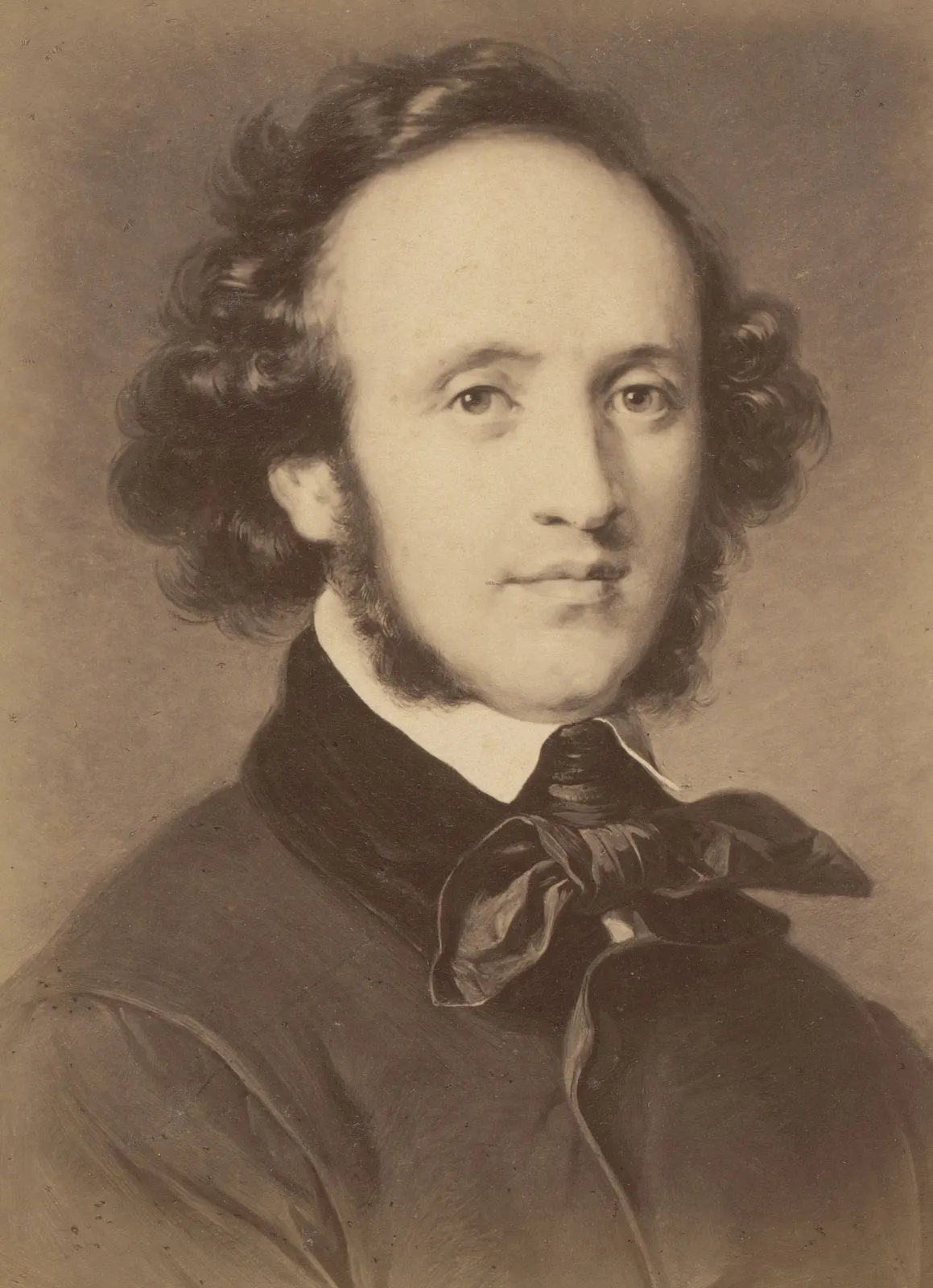
Composed in 1839, Mendelssohn’s brilliant first piano trio is one of the composers most well known chamber compositions. Mendelssohn unfortunately passed away at the young age of 38; nonetheless, he lived a remarkably happy life, especially by composer standards. He was happily married, a bona fide genius, a brilliant composer/conductor, a master chess player, a social icon in Germany, and, not to mention, rather handsome. Some of his most famous works include the Midsummer Night’s Dream score, the Violin Concerto in E-Minor (a favorite among violinists), as well as numerous other choral and chamber works. With all of this in mind, it is no wonder that he is considered by many to be the “Mozart of the 19th century”(Glass). The example of genius I have for you today is a gorgeous piano trio that Mendelssohn wrote less than 10 years before his death. 

  • Length: ~30min
  • Structure: The piece is divided into 4 movements, with the first and final taking up the lion share of the time.
  • Sound: The first movement, titled “Molto Allegro Agitato,” is absolutely beautiful and my personal favorite! It begins with a melancholy, almost elegiac, main theme that provides the base for the rest of the movement. This theme reappears in both the piano and violin parts, and it absolutely lives rent-free in my head. The second movement is a slower movement that brings the energy down and is home to some beautiful melodies and harmonies that show off Mendelssohn’s brilliance as a composer. The third movement, “Scherzo. Leggiero e vivace,” lightens the piece by introducing spritely and upbeat melody. However, despite this lighter mood, there’s still a hint of that romantic dramaticism that carries through wonderfully. The final movement is everything that you want in a finale. While not carrying the same passion as the first movement, it still showcases the composer’s skill admirably while also presenting a compelling musical picture. One of the greatest qualities of this piece is that, with few exceptions, it sounds easy. However, make no mistake that this is most certainly an illusion! One of the greatest skills a musician can have is to make a composition look effortless, especially when that composition is anything but. In the case of Mendelssohn’s first piano trio, this illusion of ease is part of what sells the piece.

This piece is amazing for working around the house, but I find that if I study with it, I tend to get lost in the amazing melodies that this piano trio is home to.

The performance I have for you today is a Trio comprised of legendary musicians: Evgeny Kissin on the piano, Joshua Bell on the Violin, and Mischa Maisky on the cello.

Glass, Herbert. “Piano Trio No. 1 in D Minor, Op. 49.” Hollywood Bowl, https://www.hollywoodbowl.com/musicdb/pieces/2866/piano-trio-no-1-in-d-minor-op-49. Accessed 29 August 2026.

Read More Blogs and Get Your Dose of Classical Music

About Sam

Samuel “Sam” Miller is a 12th grade student at Gonzaga Preparatory school who writes and distributes a weekly classical music blog that shares different classical songs and explores their background with his teachers and peers. He is an avid violinist studying under Mateusz Wolski, and an enthusiastic member of the Spokane Youth Symphony. Samuel started this project to pursue and share his passion for classical music with others. In his free time, Sam enjoys practicing violin, going to symphony concerts, playing tennis, hanging out with friends, video games, and spending time with his family.