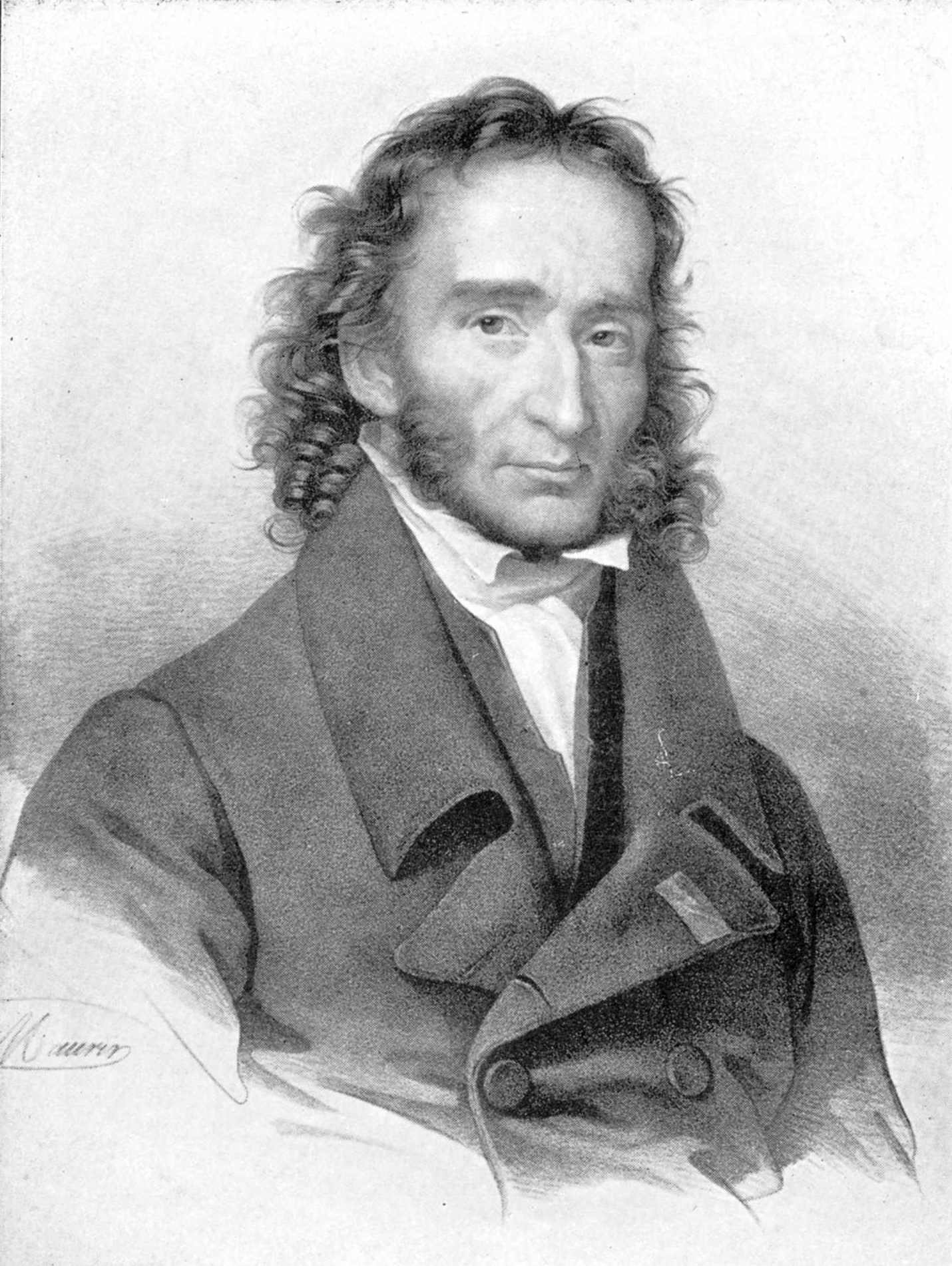
Gade & Paganini

By Sam Miller | March 1, 2026

Gade’s Tango Jalousie
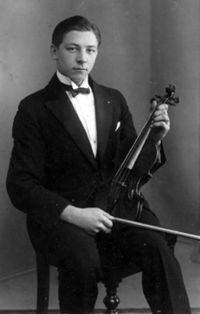
Originally called Jalousie – Tango Tzigane, this work by Jacob Gade is one of, if not the most, performed pieces of Danish music. Gade, born in the scenic city of Velje in 1879, was a fairly successful violinist. He played different gigs around Copenhagen until moving to the US in 1919. Gade returned to Denmark only two years after, but this is not to say he did not have success in the states. In fact, he won an audition for a seat as well as played in the orchestra that would eventually become the New York Philharmonic. However, upon returning to Copenhagen, he would be appointed as conductor at the Palads Theatre. It would be here that he composed Tango Jalousie, but he could never imagine the fame it would garner (“100 Years of Jalousie”).

  • Length: 4 minutes
  • Structure & Sound: The piece itself begins with a fantastic violin solo. Gade’s experience as a violinist really comes though here, and this solo instantly captivates the audience. What follows, however, is an even more amazing melody that truly feels so full of fire and, well, jealousy. It’s a short piece, but will absolutely get stuck in your head all day.

For me, this is an amazing piece when I just need a break from my day and want to vibe a little bit. It’s not too long, but it packs a serious punch.

I have two performances for you today. One is a serious one, and the other is a bit of a joke. The first, serious, one is by the MDR-Sinfonieorchester under the baton of Marcus Merkel.

The second one is by the Danish National Chamber Orchestra. However, this one has a twist: all of the orchestra perform the piece after eating “the world’s hottest chili peppers.” The orchestra is conducted by Chili Klaus, who is a self proclaimed “Danish Chili Pepper Enthusiast.” It is perhaps not the best interpretation of the piece (thought to their credit it is still quite good), but if you want to see a bunch of classical musicians looking very uncomfortable for 4 minutes, this is the recording for you!

“100 Years of Jalousie – The Legacy of Jacob Gade.” WiseMusic Classical, Wise Music Group, https://www.wisemusicclassical.com/features/2025/04/100-years-of-jalousie-the-legacy-of-jacob-gade/. Accessed 25 February 2026.

Paganini’s Violin Concerto No. 1

Composed in the mid to late 1810s (the true date is unknown), Paganini’s 1st violin concerto is considered one of the most technically challenging concertos in the violin repertoire. This is one of the pieces that undoubtedly contributed to the superstition that Paganini had sold his soul to the devil in return for ungodly (see what I did there~~~) skill on the violin. Also contributing to this theory was his “gaunt appearance” and reputation for being quite the lady’s man. In contrast, however, many Italians instead compared him to great hero’s of old like Hercules or Vergil. Needless to say, Paganini’s reputation preceded him, and his virtuosity was unmatched. However, Paganini’s focus on virtuosity and “fireworks” does not mean that he couldn’t write beautiful and memorable melodies. His 1st violin concerto is an excellent example of this. Despite being a solo for the violin, it plays much like an opera. The orchestra sings and supports the violin throughout. This is because, “the soloist assumes the role of a mythic hero, overcoming seemingly impossible technical challenges…just as Hercules executes his labors by virtue of his superhuman strength” (I read this in an article by the Houston Symphony, and I absolutely love this idea. I never thought of it that way, but it makes complete sense).

  • Length: 40 minutes
  • Structure: The piece is composed of 3 movements
  • Sound: The concerto begins with a lengthy orchestral tutti that opens the piece and lays the foundation for the solo violin. The orchestra builds the world before the soloist, or hero, arrives. However, when the soloist enters, they enter confidently with a bang. From the beginning, you truly get a sense for how the world (the orchestra) circles around our hero (the soloist). Throughout this first movement, which is the longest of the three, the violin really gets a chance to “show off,” and the part require incredible technical skill. Following the first movement is the cadenza, which I will expand on when I explain the two favorite recordings I have of this piece. The second movement, Adagio, contrasts with the first movement by taking a much more serious and dramatic tone. It’s the shortest of the three movements, but it nonetheless packs a fairly large punch. The final movement returns to form by taking a much more lighthearted and exciting tone that carries us though to the finale, which triumphantly ends the piece. This is absolutely one of the coolest pieces in the violin repertoire, and im excited that I get to share it with all of you.

For me, this piece can be a little distracting for working, but excellent for driving or simply relaxing and letting yourself get lost in the music.

I have two performances for you today. The first is by the great Augustin Hadelich, who is undoubtedly one of the greatest violinists of out time, with the Detroit Symphony Orchestra. He plays a cadenza the he himself composed for the piece, and as a whole an absolute delight to watch.

The second is a more recent recording of Singaporean violinist Chloe Chua with the Singapore Symphony Orchestra. Chua plays the cadenza written by Émile Sauret, which is likely the most difficult cadenza ever put to paper. She absolutely kills it, and when she’s finished and the orchestral tutti comes back in she gives the cutest little smile to the conductor. Both performances are phenomenal, and I recommend both equally.

Sawyer, Richard. “The Virtuoso: Paganini’s Violin Concerto No. 1.” Houston Symphony, 6 January 2020, https://houstonsymphony.org/paganini-violin-concerto-1/. Accessed 25 February 2026.

Read More Blogs and Get Your Dose of Classical Music

About Sam

Samuel “Sam” Miller is a 12th grade student at Gonzaga Preparatory school who writes and distributes a weekly classical music blog that shares different classical songs and explores their background with his teachers and peers. He is an avid violinist studying under Mateusz Wolski, and an enthusiastic member of the Spokane Youth Symphony. Samuel started this project to pursue and share his passion for classical music with others. In his free time, Sam enjoys practicing violin, going to symphony concerts, playing tennis, hanging out with friends, video games, and spending time with his family.