Tchaikovsky & Tcherepnin

By Sam Miller | May 1, 2026

Tchaikovsky’s Souvenir de Florence
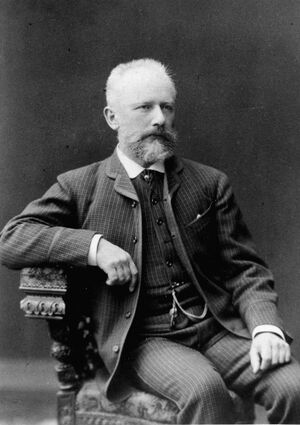
Finally completed in 1892, a majority of this momentous work was written and premiered in 1890, just after Tchaikovsky’s return from a vacation to the Italian city of Florence. The piece was composed as a response to being awarded an honorary membership of the Saint Petersburg Chamber Music Society, as well as serving as a gift to his benefactoress, Nadezhda von Meck, a successful Russian businesswoman who developed an artistic relationship with Tchaikovsky, financially supporting him for 13 years. Despite being awarded in 1886, it took the composer several years to complete the piece, which would be premiered in 1890 as part of a private concert in St. Petersburg. After this performance, however, Tchaikovsky revised the third and fourth movements, feeling that the the sextet, “turned out to be astonishingly bad in all respects” (“Pyotr Ilyich Tchaikovsky ‘Souvenir”) The piece we hear today is one of the coolest pieces of chamber music out there, and I’m excited to be sharing it with you. 

  • Length: Approximately 35 minutes
  • Structure: This piece is composed of four movements
  • Sound: The piece begins with an aggressive Allegro that instantly captivates the listener. This dramatic mood sets the tone for the rest of the piece. The next movement, an adagio, takes the energy down a level with a beautiful violin melody and pizzicatos in the rest of the strings. This violin solo turns into a duet between the violin and cello, then a viola is added, and what we’re left with is an absolutely stunning movement that really lets every instrument shine. The fourth movement, an allegretto, has a melody that gets stuck in my head and doesn’t leave for the rest of the day. I’m not quite sure how to describe it, but it’s such a cool theme. On a side note, this theme is eerily similar to the song “Innocent” in the Conclave soundtrack. I remember watching the movie and getting this strange sense of Déjà vu. The fourth and final movement is an upbeat and dramatic allegro. It has yet another catchy theme that closes out the piece in the best way imaginable. Of course, it wouldn’t be a great chamber piece if it didn’t have an ending to match, and Souvenir de Florence has an absolutely killer finale that just leaves me sitting with an awestruck look on my face every time.

For me, this piece is wayyyyy too distracting for studying, but amazing for driving, relaxing after a long day, working around the house, or high-intensity cooking (and whoever doesn’t know what high-intensity cooking is has never seen me try to make carbonara for more than 3 people).

The performance I have for you today is by Violinist Janine Janson “and Friends.”

Howard, Orrin. “String Sextet in D minor, Op. 70, “Souvenir de Florence.”” LA Phil, LA Philharmonic, https://www.laphil.com/musicdb/pieces/674/string-sextet-in-d-minor-op-70-souvenir-de-florence. Accessed 26 April 2026.

Tcherepnin Prelude to “La Princess Lointaine”
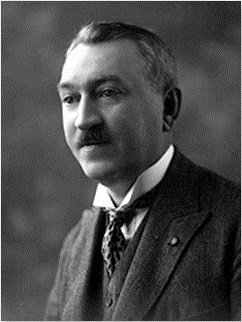
Composed in 1896, this piece lives and breathes the colors of Romanticism. Nikolai Tcherepnin was a Russian composer who lived between 1873 and 1945. He studied music at the Saint Petersburg Conservatory under Rimsky-Korsakov, and it was just after the completion of his studies that the young composer began work on music for Edmond Rostand’s 1895 play, La Princesse Lointaine (“Nikolai Tcherepnin’s Prelude to”). The play follows the fictional story of Joffroy (Geoffroy) Rudel, and it’s essentially the classic knight errant chasing after

  • Length: About 10 minutes
  • Structure: One movement
  • Sound: The piece begins with a wonderful cello solo that ushers in the other instruments. In time, an absolutely breathtaking theme takes over that always stops me in my tracks. The whole piece is full of beautiful moments like this, and I love listening to it as much as I loved playing it with the youth symphony a few months ago.

For me, this piece is absolutely perfect for winding down after a long day, and always puts my mind in a state of ease.

The performance I have for you toady is by the NDR Radiophilharmonie under conductor Stanislav Kochanovsky.

Judd, Timothy. “Nikolai Tcherepnin’s Prelude to “La Princesse Lointaine”: A Celebration of Orchestral Color.” The Listener’s Club, The Listener’s Club, 15 March 2024, https://thelistenersclub.com/2024/03/15/nikolai-tcherepnins-prelude-to-la-princesse-lointaine-a-celebration-of-orchestral-color/. Accessed 19 April 2026.

Read More Blogs and Get Your Dose of Classical Music

About Sam

Samuel “Sam” Miller is a 12th grade student at Gonzaga Preparatory school who writes and distributes a weekly classical music blog that shares different classical songs and explores their background with his teachers and peers. He is an avid violinist studying under Mateusz Wolski, and an enthusiastic member of the Spokane Youth Symphony. Samuel started this project to pursue and share his passion for classical music with others. In his free time, Sam enjoys practicing violin, going to symphony concerts, playing tennis, hanging out with friends, video games, and spending time with his family.