Strauss & Elgar

By Sam Miller | December 1, 2025

Strauss: Eine Alpensinfonie (An Alpine Symphony)
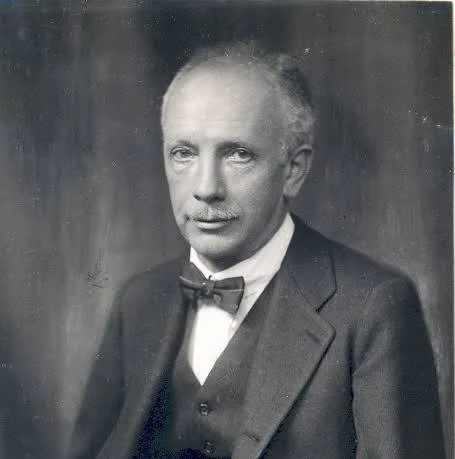
Composed between 1911 and 1915, it took Strauss 100 days to orchestrate one of the most gargantuan works of his career. Strauss was born into a musical family in 1864, and from the young age of six, began composing works on his own. These early pieces were primarily for solo piano or small chamber groups, but Strauss’s talent as a musical prodigy was apparent. The composer’s father, Franz Strauss, was an incredibly talented horn player, and supported his son in any way he could. It was in this nurturing environment that Richard Strauss grew his compositional skill and began his illustrious career. His specialty was tone poems, and composed many that made him popular across Germany. Despite his success with these poems, what Strauss really wanted was to get into opera. He was inspired, like many, by the grand operatic works of Richard Wagner, but his attempts to mimic the Germanic heavyweight’s style resulted largely in failure. In fact, Strauss would not have any success with opera in the 12 years between the composition of his first, Guntram, in 1893, and Salome in 1905, the latter of which was immensely successful, but the first, not so much. It was during these 12 years, however, that the composer’s tone poems alone had made him the most famous composer in Germany. Despite this, with the success of Salome, Strauss expressed a complete disinterest in composing any more symphonies or tone poems, and devoted himself entirely to opera. This disinterest in larger orchestral works lasted for approximately seven years, until in 1911, the composer began to sketch out what he intended to be his final tone poem: Einen Alpensinfonie. This poem drew inspiration from Strauss’s childhood memories. Specifically, it paints the image of a mountain trip taken by a 14-year-old Strauss. “Setting off at two o’clock in the morning, five hours of climbing, sunrise, resting at summit…Then, in thunderstorms and rain, three hours downhill over hill and dale” (Pfister). The Alpine Symphony epitomizes the idea of a “tone poem” or “tone painting.”  A tone painting is the musical technique of reflecting literal feelings or environments into the music. For example, high lofty notes in the strings could represent wind, while a deep, dark bass melody could represent death. Many romantic pieces do this to various extents, but works such as Rachmaninoff’s “Isle of the Dead” or Strauss’s “Alpensinfonie” push the envelope of what is possible with this concept.

  • Length: 60 minutes
  • Structure: 22 sections
  • Sound: At about 60 minutes, Eine Alpensinfonie is actually divided into 22 individual sections. All of these sections are interconnected, for simplicity’s sake, I’m going to use the piece’s programmatic story line to break it down instead. The piece begins at night. Even in the darkness, you can feel the grandeur of the mountain towering above as well as the cool summer air against your cheek. The night does not last for long, however, and the music crescendos to a bright, beautiful sunrise. Following the sunrise, the music settles and begins a slow ascent of the mountain. In these ascending passages, Strauss brings to life the picturesque landscape of the forests, meadows, and pastures. String arpeggios are used to depict the life in the forests, and birds can be heard chirping throughout. As Strauss climbs ever closer to the peak, he depicts danger encountered by the hiker in the form of a section aptly titled, “Dangerous Moments.” However, once this danger is passed, the hiker reaches the summit. Strauss depicts this moment with a beautiful song from the oboes that depicts the unimaginable beauty of the mountain scape. This contemplative solo gives way to a truly amazing climax that encapsulates the grandeur of the scene. This climax eventually diffuses into a calmer melody as fog starts to roll in. This fog is the harbinger of a tempest that will plague the hiker on his descent. As the storm gets closer, the music takes on an increasingly foreboding attitude. Eventually, the storm roars in with full force; wind swirls violently around the mountain, and torrential rain pelts everything in sight. This is one of the most vivid scenes in the entire piece. Strauss uses a unique percussion instrument simply called a wind machine that adds a whole new level of immersion to the poem. Like everything, the storm passes after a time, and the calm that follows is crowned by a glorious sunset. The theme from the summit is rediscovered in this moment, signifying the hypnotizing beauty of nature once again. The sections that follow, “Epilouge” and “Night,” respectively, close out the piece. This gargantuan piece ends not with a glorious fanfare, but with a touching return to the section that started it all. Strauss’s Alpine Symphony is an absolutely amazing journey. I loved every minute I spent writing about it, and I hope you enjoy it just as much as I do. Something to look out for when listening is all of the unique percussion instruments that Strauss uses to depict sounds such as birds or the wind. 

This piece is great for long road trips or driving up to the ski hill.

The performance I have for you today is by the Frankfurt Radio Symphony Orchestra under the baton of Andrés Orozco-Estrada.

Chamber Music Society of Lincoln Center, https://www.chambermusicsociety.org/about-the-music/composers/richard-strauss/. Accessed 23 November 2025.

Gilliam, Bryan. “Richard Strauss (1864–1949): Biography, Music + More | CMS.”

Pfister, Werner. “Richard Strauss’s “An Alpine Symphony.”” Berliner Philharmoniker, https://www.berliner-philharmoniker.de/en/stories/alpine-symphony-introduction/. Accessed 23 November 2025.

Elgar’s Cello Concerto No. 1

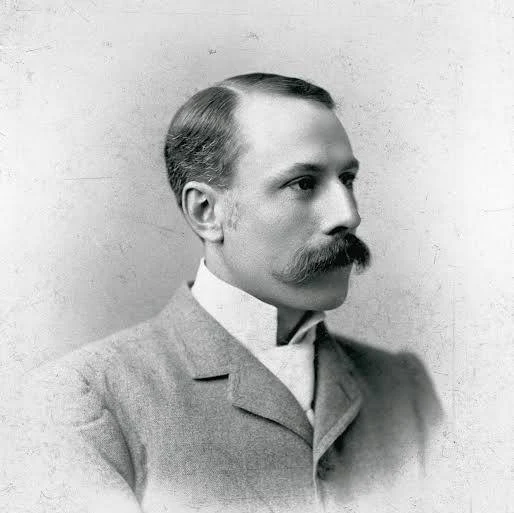
Completed in 1919, Elgar’s Cello Concerto was written as a lament for the tragedy of the First World War. Sir Edward Elgar himself was a British composer that didn’t truly achieve fame until his early 40s. Born into a Catholic household in Protestant England, Elgar felt that his family’s religion coupled with their poor financial stability limited the musical opportunities available to him at the time. Despite these setbacks, he never let his passion for music die. Elgar’s father was a piano tuner, and the future composer taught himself the piano at a young age. He studied scores from his father’s shop, and learned to play the organ through a local Catholic Church. Furthermore, later in his life, Elgar also taught himself the bassoon and trombone, as well as taking violin lessons from Adolf Pollitzer in London. Despite his passion, the composer would not have any true success until 1888 with his piece “Salut d’amour” for Violin and Piano. This charming piece, while not the defining work of his career, certainly put him on the British musical map. True fame would arrive for Elgar in 1899 with the Enigma Variations. The Enigma variations would make Elgar a household name across Britain, and skyrocket his career into the spotlight. For the next 20 years, Elgar would compose symphonies, overtures, and tone poems, including the famous Pomp and Circumstance March, which is played at high school and college graduations the world over. In 1919, Elgar would sit down and compose what would be his last full-scale orchestral work. The composer had been deeply perturbed by the war, and both poor health and financial insecurity plagued him in his later years. This pain is felt in his cello concerto.

  • Length: About 30 minutes
  • Structure: This piece has four movements
  • Sound: The piece begins with striking chords from the solo cello that reverberate across the concert hall, and instantly put the listener in a trance. The first movement, “Adagio — Moderato,” is full of gentle pain that ebbs and flows throughout the movement. It builds to great crescendos only to fall back again. The second movement, “Lento — Allegro Molto,” begins with a repetition of the opening chords but as pizzicato. It’s a touching styalistic choice that makes the music feel more heartfelt and impactful. Despite this dark opening, the movement transitions to an almost cheerful and rapid motif. The cello line moving frantically at breakneck speeds seems to sometimes clash with the upbeat string melody behind it. The third movement, another adagio, slows things down from the tumultuous rush of the previous movement and introduces an intoxicating contemplativeness to the piece. The finale, “Adagio — Allegro non Troppo,” brings back the intensity of the first movement, but with a softer touch. The music builds through the finale, incorporating themes from the first movement. The piece ends with the same powerful chords that build to a fast and dramatic finale. This is hands down one of the most defining pieces of classical music.

I could listen to it on repeat while laying in bed, but it’s also an amazing listen while driving.

The performance I have for you today is by cellist Jacqueline Du Pre (amazing name by the way) with conductor Daniel Barenboim. 

“Cello Concerto in E Minor, Op. 85.” LA Phil, LA Philharmonic, https://www.laphil.com/musicdb/pieces/1213/cello-concerto-in-e-minor-op-85. Accessed 23 November 2025.

Mcguire, Charles Edward. “Edward Elgar (1857–1934): Biography, Music + More | CMS.” Chamber Music Society of Lincoln Center, https://www.chambermusicsociety.org/about-the-music/composers/edward-elgar/. Accessed 23 November 2025.

Read More Blogs and Get Your Dose of Classical Music

About Sam

Samuel “Sam” Miller is a 12th grade student at Gonzaga Preparatory school who writes and distributes a weekly classical music blog that shares different classical songs and explores their background with his teachers and peers. He is an avid violinist studying under Mateusz Wolski, and an enthusiastic member of the Spokane Youth Symphony. Samuel started this project to pursue and share his passion for classical music with others. In his free time, Sam enjoys practicing violin, going to symphony concerts, playing tennis, hanging out with friends, video games, and spending time with his family.