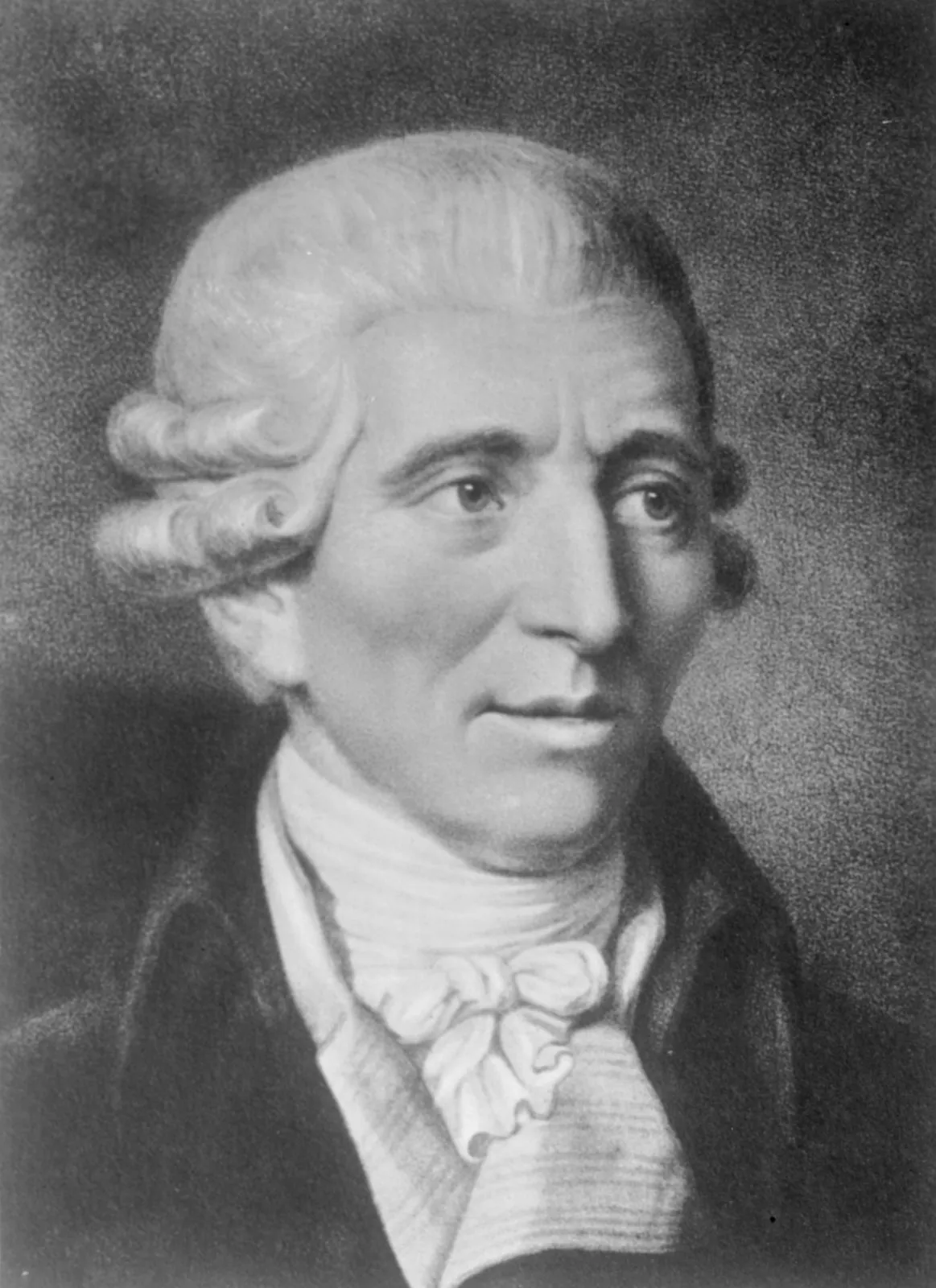
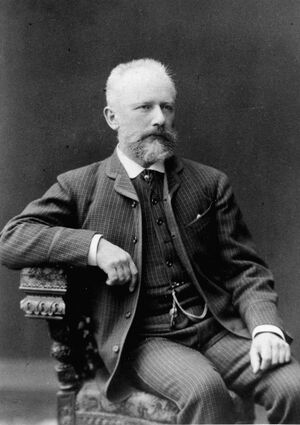
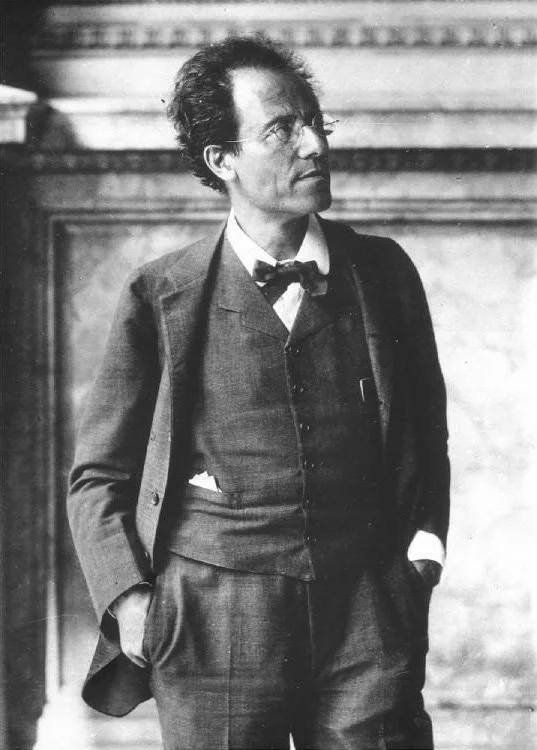
Mendelssohn, Haydn, Tchaikovsky & Mahler

By Sam Miller | January 1, 2026

Mendelssohn’s Am Neujahrstage
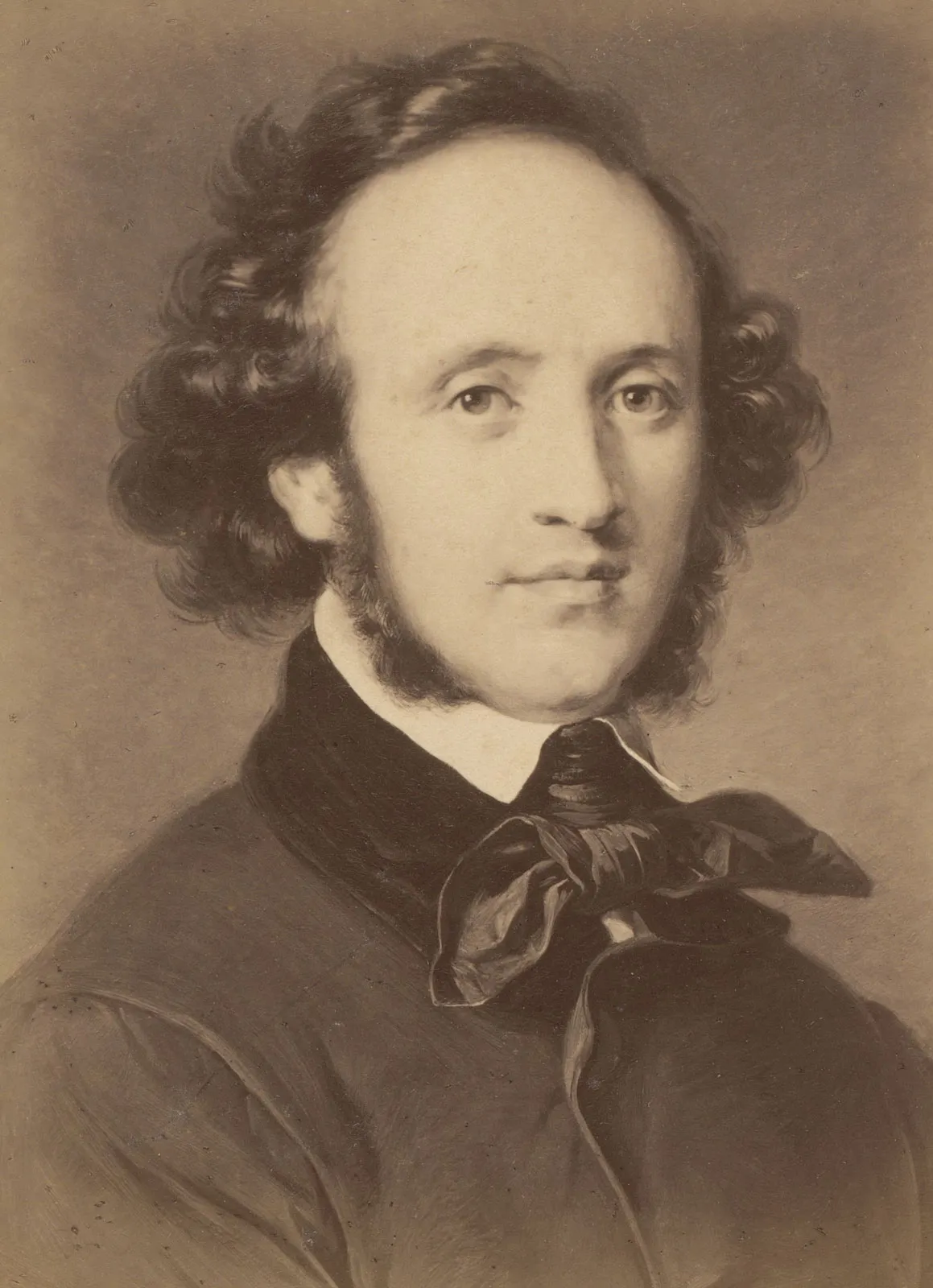
Composed in the last years of the composer’s life, “Am Neujahrstage” (The New Year) is part of his “Sechs Sprüche” (Six Anthems), a collection of short choral pieces that highlight the different christian holidays throughout the year. Mendelssohn was born into a prominent Jewish family. His grandfather, Moses Mendelssohn, was one of the most prominent German Enlightenment thinkers, as well as being the face of the “Jewish Enlightenment,” which aimed to better integrate Judaism into society through the application of reason and other philosophies of the time. Mendelssohn’s father was a successful Jewish banker, but unlike his staunch Jewish father, converted to Protestantism and added the surname “Bartholdy” to the family name. Thus, when Felix Mendelssohn-Bartholdy was born, he was baptized Lutheran. From an early age, Mendelssohn was heavily influenced by the religious fervor in his household, and would go on to produce many works with a central religious theme. As years passed, the composer never lost his religious fervor, and a certain religiosity is present in many of his works, regardless of their theme. “Every kind of music ought, in its own particular way, to tend to the glory of God” is what Mendelssohn wrote to his friend, Julius Schubring. (“Felix Mendelssohn’s Church Music”). The “Sechs Sprüche” were some of Mendelssohn’s final works, but carry as much religiosity as any other, if not more. Commissioned by German Emperor Friedrich Wilhelm IV, The “Sechs Spruche” were written for the Berlin Cathedral choir, and were not originally a set.

  • Length: About 2 minutes
  • Structure/sound: They were simply standalone pieces, about two minutes each. “Am Neujahrstage” (The New Year) is just one of these short poems. Based on Psalm 90, “Am Neujahrstage” proudly proclaims, “Lord, God, you are our refuge for evermore. Before the Mountains were made, and the earth and the world were created, you are God from everlasting to everlasting. Hallelujah!”

At only two minutes, this beautiful choral work is a great way to take a small break from your day and relax.

The performance I have for you today is by the Kammerchor Stuttgart.

Blezzard, Judith. “Felix Mendelssohn’s Church Music.” Church Music UK, 27 September 2008, https://www.church-music.org.uk/articles/Mendelssohns-Church-Music.pdf#:~:text=But%20perhaps%20the%20most%20interesting%20and%20varied,New%20Year%2C%20Passiontide%2C%20Good%20Friday%20and%20Ascensiontide. Accessed 24 December 2025.

Keene, Dennis. “Program Notes – Mendelssohn Festival.” Voices of Ascension, Voices of Ascension, https://www.voicesofascension.org/32614-mendelssohn-1#:~:text=We%20begin%20the%20concert%20with,from%20one%20part%20after%20another. Accessed 24 December 2025.

Haydn’s Trumpet Concerto

Composed in 1796, this short concerto was written as a showpiece for the trumpet. The trumpet is an instrument that has gone through much change and development through the centuries of music history. From the long, cone-like business of the middle ages to the refined music machine that we hear today, many innovations throughout the centuries have made the trumpet a more versatile tool in the ensemble and as a solo instrument. However, as late as the 1700s, the trumpet was still a rather rudimentary instrument. While talented trumpeters could play complex pieces in very high registers, this was reserved for the very few. For the typical orchestral trumpeter, a piece might only include 10 different notes, and these notes would constitute an incredibly boring part. In the latter half of the 18th century, however, new inventions were beginning to rectify this issue. One of the first big breakthroughs was Anton Weidinger’s “Keyed Trumpet.” This invention took inspiration from woodwind instruments of the time by adding holes to the instrument that, when covered, could change the pitch of the instrument and play notes that were previously impossible to attain. Weidinger was incredibly proud of his invention, and commissioned pieces from several different composers to demonstrate the trumpet’s ability. Haydn was one of these lucky composers, and fell in love with the new instrument. Alas, the Keyed Trumpet was not meant to be. Despite its revolutionary range, it suffered many additional problems including, an often nasally sound, poor projection in the higher registers, and poor intonation in some notes. It would eventually be replaced with the “Valved trumpet,” which fixed many of the major problems, and is the trumpet that we see today. However, while the Keyed Trumpet may be a thing of the past, its legacy lives on in the pieces composed for it, none more famous than Haydn’s Trumpet Concerto. 

  • Length: About 15 minutes
  • Structure: This piece is composed of 3 movements
  • Sound: Haydn’s Trumpet Concerto demonstrates the composer’s love for this new, or rather evolved, instrument. The piece begins with the trumpet joining the orchestral tutti playing notes that are all playable on the pre-existing trumpets of the age. However, beginning at the first solo entrance, the trumpet leaps into scales, chromatic slides, and all manner of virtuosity not possible on “normal” trumpets. Occasionally, the trumpet returns to a simple fanfare, “as if Haydn wants to remind us that this new-fangled thing really is a trumpet” (“Trumpet Concerto”). The second movement tones it down a little, presents a more melodic and simple tune, but still involves notes in the trumpet that would be previously impossible. These notes would stand out to an 18th century audience, who would not be accustomed to the keyed trumpet’s newfound versatility. The third movement is the most famous of the three. It’s an incredibly catchy melody that can get stuck in your head all day if you aren’t careful. It masterfully demonstrates not only the capability of the instrument, but the skill and virtuosity of the soloist. 

This piece runs pretty short at only 15 minutes, so it’s a great listen during a break in your day or while driving.

The performance I have for you is by Gábor Tarkövi with the Karajan-Academy of the Berlin Philharmonic under the baton of Marc Minkowski.

“Trumpet Concerto.” LA Phil, Los Angeles Philharmonic, https://www.laphil.com/musicdb/pieces/4387/trumpet-concerto. Accessed 23 December 2025.

Tchaikovsky’s 1812 Overture

Celebratory staple of the 19th century, Tchaikovsky’s 1812 Overture was not as loved by the composer as it was and still is loved by audiences around the world. The 1812 was composed via commission from his publisher in 1880 for an “Arts and Industry” Exhibition in Moscow. Nikolai Rubinstein, organizer of the exhibition, gave the composer three options: First, it could be an overture to inaugurate the exhibition itself; second, it could be an overture to celebrate Tzar Alexander II, who came to power in 1855; thirdly, it could be a cantata to celebrate the opening of the Cathedral of Christ the Redeemer. Tchaikovsky kind of just did his own thing. The Cathedral of Christ the Redeemer project was originally planned as a commemoration of the defeat of Napoleonic forces from Moscow in 1812. Thus, Tchaikovsky wrote an overture to celebrate the same thing. The 1812 overture was not written to commemorate the American war of 1812, as many believe, but instead the Russian victory over Napoleon. Regardless of the true meaning of the piece, however, Tchaikovsky was less than enthusiastic to write it. “There is nothing more antipathetic to me,” he writes, “than composing for the sake of some festivities or other.” The composer would go on to complete the overture in one week, as if to make a statement of his apathy. In a letter to a friend, Tchaikovsky states, “I wrote it without any warm or loving feelings, and so it will probably be lacking any artistic merit.” Nonetheless, eighteen months after composing the piece, Tchaikovsky betrayed some feelings regarding his composition: “I’m undecided,” he writes, “as to whether my overture is good or bad, but it is probably the latter.” The piece was premiered in 1882 in Moscow as planned, but following the premiere, Tchaikovsky never really mentioned the piece again, despite its success both at home and abroad. Regardless of how the composer may have felt about his piece, it is nonetheless an absolute blast to listen to.

  • Length: About 15/16 minutes
  • Structure: This piece is composed of one movement
  • Sound: The piece begins with the Russian orthodox chant, “God, Preserve Thy People” in the strings. Throughout the piece, there are various motifs that are used and reused in order to give the piece an exceptionally Russian feel. Not only does he use “God, Preserve Thy People” to open the piece, but quotes the Russian folk song “By the Gates,” as well as including a stirring rendition of “God Save the Tzar” to close the piece. However, not only Russian songs were quoted. To represent the French, Tchaikovsky used the French anthem Marseillaise, which, interestingly enough, was actually banned under Napoleon and was not reinstated as the official French anthem until the 1870s. None of the Russian brass cared about this, and I don’t believe it has caused any real controversy over the past 140 years. What did cause controversy, however, was the use of “God Save the Tzar” in the finale. After the Russian revolution, quoting “God Save the Tzar” in bold, fantastic fanfare was not exactly in line with party ideals. To rectify this, the Soviets simply cut out the 10 bars that contained the reference, and replaced them with the “Gloria” chorus from Glinka’s opera, “Ivan Susanin.” A little clunky, perhaps; a bit sacrilegious, most definitely; but it got the job done. For the rest of the world, and following the fall of the Soviet Union, the 1812 overture was played as Tchaikovsky intended, if not entirely as he wanted. The Spokane symphony plays it every year at the Labor Day concert, and it is absolutely the highlight of the program.

I love listening to this piece while driving or after a long day. It’s a great way to reinvigorate yourself for things to come.

The performance I have for you today is by the Societat Musical d’Algemesí under conductor Alberto Ferrer Martinez.

Mangum, John. “1812 Overture.” LA Phil, Los Angeles Philharmonic, https://www.laphil.com/musicdb/pieces/152/1812-overture. Accessed 27 December 2025.

Norris, Geoffery. “Tchaikovsky’s 1812 Overture: The Complete Guide.” Gramophone, MA Business and Leisure, 3 January 2023, https://www.gramophone.co.uk/features/article/tchaikovsky-s-1812-overture-the-complete-guide. Accessed 23 12 2025.

Mahler Resurrection

The grandfather of epic music, Mahler is considered by some to be the epitome of German composers, and is credited with linking 19th-century romanticism with the modernism and contemporary ideas of the 20th century. The second of fourteen children, Mahler grew up in a German-speaking Jewish family in what is now the Czech Republic. Later in life, Mahler would express that he never felt like he truly belonged and that he was, “always an outsider, never made welcome.” Despite this internal struggle, Mahler was a gifted musician at a young age, and was already considered a prodigy at 10 years old. At 15, he had already begun at the Vienna Conservatory.
In 1880, Mahler began his conducting career in opera houses across Austria and Germany. During this time, he composed a considerable amount of pieces, but most have been lost to time. By the late 1880s, Mahler was beginning to garner a respectable reputation for himself and began to take conduction appointments in Prague and Leipzig. During his appointments, Mahler completed his first orchestral song cycle, Lieder Eines Fahrenden Gesellen (Songs of the Wayfarer)(Clements). It was also around this time that he began to orchestrate larger scale symphonic works. In 1888, he completed his first symphony. Titled Titan, the symphony borrowed ideas and songs from his song cycle. The work was originally envisioned to have five movements, but he dropped one movement, leaving us the four we hear today. The piece centers around the story of a great hero and his travels.
However, though the 1st symphony was just completed, the seeds of the 2nd were already being planted. In the same year, Mahler sketched a symphonic poem by the name of “Totenfeier,” or Funeral Rites. To Mahler, this was the death and funeral of the hero from the first symphony. After he finished composing it, Mahler took it to the great pianist and conductor Hans von Bülow, for input. As the story goes, Mahler performed the piece on the piano for him, but whenever he started playing, Bülow would cover his ears. Mahler would stop and look at him, and Bülow would uncover his ears. Mahler would begin again, and Bülow would go back to covering his ears. This went on until Mahler finished the piece. After Mahler concluded, Bülow said to him, “If that was music, I don’t know what music is.” Despite this backlash, Mahler reused this poem as the first movement of the second symphony.
  • Length: About 90 minutes
  • Structure: The full symphony consists of five movements.
  • Sound: The first movement, as mentioned, is about the death of the hero, and has the feel of a funeral march. The movement starts with an angry, dramatic cello and bass motif that transitions into a funeral march and begins to grow. While the overall mood of this movement is somber, there are contrasting movements that juxtapose the funeral march’s feel with a motif that sounds like heaven.
    The second movement also explores and contrasts light and dark. It starts with a waltz but quickly changes to a frantic, minor motif. These two ideas swap throughout the movement. Something to look out for in this movement is the string players playing different music from their stand partner. This is because Mahler occasionally divides the parts into two to add even more layers to the music.
    The third movement is a scherzo. The music feels mischievous, and slowly builds to a dramatic and desperate “death shriek.” A “death shriek” is a loud, often dissonant chord that conveys a feeling of dread or despair. In Mahler’s 2nd symphony, this is no different, but following this chord, we glimpse sunlight.
    The fourth movement is the shortest of the five, but it is our first look into another thing that makes this symphony special. Mahler’s Second Symphony is one of the rare symphonies that incorporates choir and vocal performances. The title of the movement, “Urlicht,” means “Primeval Light”. The movement is somber, but beautiful.
    The fifth and final movement is pretty much the best thing ever. It’s the longest movement of the piece, and serves as the culmination of the entire symphony. The final movement can be divided into two parts. The first is fully orchestral, and resembles the first and third movements of the piece. A few things to look out for are the off stage solos from the brass. These can be easy to miss, but they add a new dimension to the piece. The piece is full of amazing brass chorales, and this movement is certainly no exception. Throughout the first and second halves, the brass play a crucial role in adding power to the piece. The second half is really amazing. It’s the introduction of the choir and vocalists. Some of the motifs from the first half are repeated, but this time with a choir. Throughout this movement, the choir sounds like angels. This choir part in the second half of the movement is actually what gives the symphony its nickname, “The Resurrection Symphony.” The choir sings, “Aufersteh’n, ja auferste’n,” which means, “Rise again, yes, rise again.” The movement slowly builds to the finale. The finale is the resurrection of the hero that died in the first movement, and this is my absolute favorite part of the piece. Mahler composes parts for basically every instrument; if you listen carefully, you can hear all of the typical string and brass instruments, but organ and church bells as well. All of it comes together in the ultimate climax that never fails to make me smile. I won’t spoil too much of the finale, but trust me when I say it’s an amazing experience that I would do anything to hear again for the first time.
    This is absolutely my favorite piece of music. For me, it is the epitome of all I look for in classical music. Its composition is genius, it tells a story, it has amazing highs and lows, and features one of the greatest finales ever orchestrated.

Due to this piece’s incredible length, it can be good to listen to it while studying or working, but I recommend listening to the second half of the final movement without doing anything. Just enjoy the experience. 

I have two recordings of this piece to recommend. The first is by the Royal Concertgebouworkest Orchestra, and my personal favorite. It should be noted that this recording is very quiet. I had to listen on full volume to hear some of the quieter sections, but I really enjoy this interpretation. Additionally, this is a pro classical music fan tip: European orchestras, as a general rule, do not include ads in the middle of the piece, only at the beginning and end.

The second recording is a legendary one by Leonard Bernstein in 1972. If you have seen the movie Maestro, it’s the same exact recording that is portrayed in the movie.

Basinger, Bettie Jo. “Mahler Listening Guide | Symphony no. 2 in C Minor (“Resurrection”).” Utah Symphony, 6 November 2014, https://utahsymphony.org/explore/2014/11/mahler-2-listening-guide/. Accessed 14 January 2025.

Clements, Andrew. “Mahler: where to start with his music | Classical music.” The Guardian, 29 July 2020, https://www.theguardian.com/music/2020/jul/29/mahler-where-to-start-with-his-music. Accessed 14 January 2025.

Henken, John. “Symphony No. 2.” La Phil, https://www.laphil.com/musicdb/pieces/3938/symphony-no-2-resurrection. Accessed 14 January 2025.

Read More Blogs and Get Your Dose of Classical Music

About Sam

Samuel “Sam” Miller is a 12th grade student at Gonzaga Preparatory school who writes and distributes a weekly classical music blog that shares different classical songs and explores their background with his teachers and peers. He is an avid violinist studying under Mateusz Wolski, and an enthusiastic member of the Spokane Youth Symphony. Samuel started this project to pursue and share his passion for classical music with others. In his free time, Sam enjoys practicing violin, going to symphony concerts, playing tennis, hanging out with friends, video games, and spending time with his family.