


New Years Eve: Beethoven’s 9th
December 31, 2024
James Lowe, conductor
Dr. Meg Stohlmann, chorale director
Spokane Symphony Chorale
SOLOISTS
Malinda Wagstaff, soprano
Dr. Nicole Sonbert, alto
Joel Cummings, tenor
Jadrian Tarver, D.M.A., bass
Ring in the New Year with the grandeur of Beethoven’s monumental Ninth Symphony! Celebrating its 200th Anniversary, this work dedicated to freedom, joy and unity is an uplifting masterpiece, with its crowning jewel — “Ode to Joy” chorus performed by the Spokane Symphony Chorale. It’s a beautiful way to look boldly to the new year ahead.
Join us for the After Party for a complimentary glass of champagne and a bite to eat hosted by Clearwater Paper. And, the night doesn’t stop here. Your ticket is also free entry to the Master Class Big Band Celebration at The Knitting Factory. All ages welcome.
DOORS 6:30PM | SHOW 7:30PM
Symphony No. 9 in D Minor, op. 125
In the decade leading up to about 1812 Beethoven had enjoyed the most productive period of his life. He not only had composed well over two dozen major works—works that stand in the highest ranks of Western music—and many more other compositions in various genres, but he had changed the game of musical composition in lasting ways. Building upon the work of Haydn and Mozart, he crafted a musical language that would forever set the mark for those who aspire to a musical style that is founded in an unprecedented internal coherence, logical extension and exploration of tonality, and a remarkable economy of means. Moreover, he did so within a relentless exploration of formal, architectural structure, as well as developing a deep, expressive, lyrical and dramatic content. In essence—he had become the Beethoven who has hence stood in the exalted ranks of classical composers.
It was not without its personal price, however. In addition to the intensity of his busy life as a composer of works that constantly evolved in content and complexity, he faced constant pressures in coping with his loss of hearing, his wrangles with his family, his disappointments in personal relationships, and the never-ending hassles with publishers and impresarios. In short, by about 1812 there began a period of less productivity, of reconsiderations of the path forward in musical style–and just plain mental and physical fatigue. It was the beginning of a time that eventually led to what musical scholars have commonly referred to as his last, and third, stylistic period. While the works from this period are universally hailed by musicians as works of genius and unparalleled in their advanced style, it must be admitted that much of the concert-going public still has difficulty with appreciating the spare, often obscure, and abstract nature of many of these compositions. And yet, there is the Ninth Symphony, standing apparently forevermore in the smallest circle of almost everyone’s most beloved works of Beethoven. How is this possible? Is the Ninth Symphony not characteristic of the other works from this late, difficult period? Wherein lies the almost universal appeal?
Development of the symphony as a genre from the models left by the mature Haydn and Mozart to its position of central importance in the musical world was one of Beethoven’s greatest achievements. Discounting the derivative first two symphonies—as good as they are—the core of his symphonic achievements lies in the six symphonies of the aforementioned decade. He finished the eighth symphony in 1812 and about that time began a few sketches for the ninth. It is clear that at that juncture he did not envision the special place that the ninth would take in his oeuvre, but rather, it was just the next one, number nine. Work went more slowly, however, and even after the Philharmonic Society of London formally commissioned the Ninth Symphony in 1817, serious efforts did not begin until around 1822, with completion only in 1824, about three years before his death. A major element in the work, the novel and unprecedented incorporation of a choral setting of Schiller’s Ode to Joy poem, had actually been in the back of his mind since way back in 1793, but had not yet found its ultimate musical rôle for Beethoven. And, of course, he had composed the Fantasy in C Minor for Piano, Chorus, and Orchestra, op. 80 later, in 1808, as a “brilliant finale” for the concert which saw the premières of the fifth and sixth symphonies. There are many similarities between the Choral Fantasy and his setting of Schiller’s poem in the Ninth Symphony. They have always been clear to all, and the composer himself acknowledged the kinship. They include strong melodic and harmonic similarities between their respective main tunes, and a like idealism in universal human and artistic values expressed in the texts. So, all in all, there were lots of elements stewing in the pot during the long gestation period of this major work of his last years.
All of these elements came together in a work that was significantly different from the great six symphonies that preceded it. To be sure, the novelty of the choral finale, with four vocal soloists, was sufficiently path breaking. There was also a logical extension and development of technical elements in form and texture, as well. But even lay audiences immediately sensed a more abstract, elevated, and deeper sense of spiritual “mission” from the outset.
The central idea of the symphony obviously stems from Schiller’s poem celebrating the universal brotherhood of mankind. But that celebration is not easily, nor quickly arrived at. Before the stirring words of the fourth movement, there is much psychological ground to be explored—and so the first three movements delve into darker reflections of the realities of existence. The first movement opens with a floating, ominous “cloud” of suspense whose exact tonality is fittingly indeterminate. But after sixteen bars, the main theme—a jagged and dynamic affair—appears in the central key of D minor. Other motives appear in constant parade—quite unlike many of his other works in which he literally works to death a single idea. This movement is rife with aphoristic, and eminently useful ideas, all contributing to a sense of unity, despite their multiplicity. The careful listener will find that as the movement constantly explores the stress, uncertainty, and challenge of making sense of existence, these motives pervade the musical fabric and carry the whole along. A further sense of unrest is generated by Beethoven’s tendency—a common one in his late works—to avoid the structurally reassuring contrast of tonic and dominant keys. Here, the tonal polarity is between D minor and Bb major—one of the composer’s favorite juxtapositions of keys. While there are many quiet moments (even in “happy” keys), the dark uncertainly pounds along all the way to a forceful conclusion—in which it might be said that nothing is actually “concluded” with regard to higher matters.
Conventionally, the fast, dance-like (or in this case, scherzo) movement is the third one, but in this case Beethoven chose to put it second. Like the beloved last movement, it has garnered a secure place in popular culture, even serving some years ago as the theme for the evening television news. And like the first movement, there is no joy in this one, either. It is a serious, hammering thing, driven by the timpani, which opens the movement with its signature rhythm. Usually, the formal structure of a scherzo is somewhat straight forward, but the composer chose here to employ the full sonata form, with its first and second theme groups, development section, and recapitulation—yet more evidence of the scale and importance that Beethoven imbued in the work. It is relatively easy to keep track of the main section and its repeats, for the composer has thoughtfully provided us with three bars of complete silence to mark them. The traditional middle section of a scherzo, the trio, here is unusual in that it is not only in duple meter (two to the bar), but is in the cheerful parallel major key—really, one of the first extended sections in the symphony thus far not in a minor key. After this diversion, the expected return to the first section occurs, but severely abbreviated, and after a quick allusion to the trio, a sudden ending surprises us.
The Adagio is a glorious example of Beethoven’s unequalled skill in evoking the transcendent. A leisurely exploration in anticipation of the “joy” of the last movement—and which has hitherto eluded us—it continues the delicious juxtaposition of the keys of Bb and D major/minor. After a brief introduction, the violins play the familiar theme in Bb, followed shortly by the other half of the main theme, but now in the other key. Two variations on these themes in various remote and refreshing keys constitute the body of the movement. A little fanfare-like figure introduces the coda, and after a bit more variation (Beethoven can never resist the procedure) this meditative episode is over.
The incorporation of a chorus in the last movement was simply unprecedented at the time, and still is remarkable. But then, a choral setting of Schiller’s poem is, of course, the raison d’être of the whole symphony. But how to transit into it after such a serious, long, and imposing three movements? That it gave Beethoven fits is well documented. He labored at many solutions before finding the way that seemed to make the whole affair a logical procession to the inevitable. And so the unique form of the last movement effects that end. The “roadmap” of the movement is varied and somewhat complex, but in the end it all makes sense and informs the sense of inevitability as it proceeds.
The movement begins with a fiery storm of agitation, quickly followed by the solo basses literally singing like an operatic bass, in the best of vocal recitative style, obviously taking over the show. The orchestra presents a short review of snatches of the first three movements—with the basses seeming to “reject” them. The basses, which obviously have found the solution, present their idea, an intimation of the famous last movement’s tune. The real theme then appears several times, each with fuller harmony and orchestration. But, apparently, that’s not sufficient, and a human voice finally enters—to the tune of the original recitative by the basses and entreats all: “Oh, friends, not these tones!” More variations follow, this time in various combinations of vocal soloists and chorus, each one raising the emotional and musical stakes. At the climax it is all dramatically broken off at the words: “Before God!”
What ensues is a kind of Turkish march that starts softly in the lower voices (including the distinctive contra-bassoon). This last variation gradually builds, helped by the interjections from the excited tenor and the men in the chorus. When the climax is reached, the voices drop out, and the orchestra zips into double fugue in the same bustling march rhythm. After a short, quiet transition the full orchestra and chorus blaze out with the main theme.
But, soon thereafter all slows down and the chorus and trombones dramatically intone the directive for the “millions” to embrace the earth below of the “common Father.” A short hymn-like passage then earnestly and reverently changes its mind, and suggests that all should “look upward” to the Maker’s mansion in the starry pavilions. In joy at this new understanding of mankind’s salvation, chorus, soloists, chorus, and orchestra plunge into the general celebration of that fact. Dramatic variants of tempo, texture, and familiar themes drive us to a conclusion that has few equals in all of music—and we are reminded, yet again, of why Beethoven, notwithstanding the human faults that he shares with us all, had the inimitable gift to point the way to human transcendence.
–Wm. E. Runyan © 2015 William E. Runyan
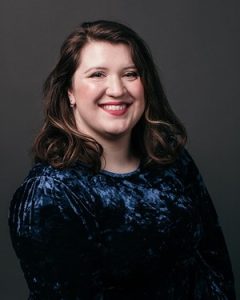 Malinda Wagstaff is a soprano with a gleaming voice and a passion for storytelling from Spokane, Washington.
Malinda recently earned her master’s degree from Indiana University under the guidance of esteemed soprano Carol Vaness.
This season, she is a studio artist for Puget Sound Concert Opera, and was featured in their season preview with scenes from Verdi’s “Il Corsaro” and Beethoven’s “Fidelio.” She will cover Medora in their upcoming production of “Il Corsaro.”
Last season, Malinda was featured as Annina in “La Traviata” with Inland Northwest Opera. She also performed as Mutter in Indiana University’s production of “Hänsel und Gretel” and the titular role in “Tosca” in Heidi Grant Murphy’s Opera Workshop.
Previously at IU, Malinda has performed as First Lady in “Die Zauberflöte” and in the ensembles of “Falstaff,” “La Rondine,” and the world premiere of “Anne Frank” by Shulamit Ran. In Carol Vaness’s Opera Workshop, she performed the role of Manon in act two of “Manon Lescaut.” Malinda earned her bachelor’s degree with high distinction from the Eastman School of Music with an Arts Leadership Certificate, where she also prepared the role of Beggar Woman in “Sweeney Todd” and performed as Angel More in “The Mother of Us All” with the Rochester Philharmonic Orchestra.
Malinda has also earned accolades for her performance on the competition stages, including the Musicfest Northwest Young Artist Competition, an Encouragement Award from the Metropolitan Opera Laffont Competition, and the Coeur d’Alene Symphony Young Artist Competition.
In addition to performing, Malinda is passionate about teaching and sharing a holistic technique with her students. She currently maintains a studio at Holy Names Music Center.
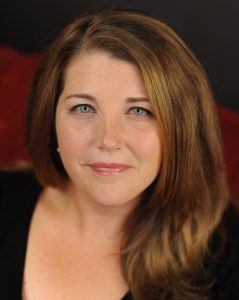 Nicole Sonbert has distinguished herself as a dynamic mezzo-soprano, whose performances and versatile talents have earned her recognition in the world of opera and beyond. With a rich repertoire that includes roles such as Madame Flora in Menotti’s The Medium and Buttercup in Gilbert and Sullivan’s HMS Pinafore, Nicole has captivated audiences. As an alto soloist, her performances of Handel’s Messiah, Mozart’s Requiem in D minor, and Beethoven’s Symphony No. 9 in D minor have resonated deeply with audiences, showcasing her vocal prowess and emotive depth.
A proud alumna of the University of Kentucky, Nicole holds a Doctorate of Musical Arts in Vocal Performance. Beyond her performing career, Nicole has enriched the lives of many as the former Youth & Family Programs Manager for Seattle Opera and Director of the Community Music School at Appalachian State University. She has also been an influential voice faculty member at the University of North Carolina at Chapel Hill, Appalachian State University, and Lees-McRae College, mentoring students who have gone on to win first-place awards in NATS and concerto competitions.
Currently, Nicole serves as the Director of Voice at Eastern Washington University, the Director of MusicFest Northwest in Spokane, Washington, and the Assistant Editor for Youth Vocal Repertoire with the African Diaspora Music Project. In addition to her performing career, Nicole is an accomplished clinician, guest presenter, adjudicator, and guest conductor. She has shared her expertise and passion for music through various educational programs and workshops.
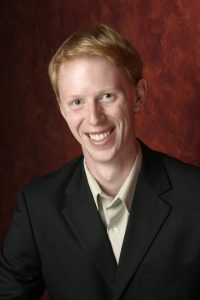 With ringing high notes and a strong stage presence, tenor Joel Cummings has thrilled audiences of all kinds from across the United States and Canada. Mr. Cummings has performed leading and supporting roles in regional opera houses across North America, including Central City Opera, Longwood Opera, Skagit Opera, Tacoma Opera, Vancouver (BC) Concert Opera Society, and the Astoria (OR) Music Festival . Role highlights include Rinuccio (Puccini’s Gianni Schicchi), Sam (Floyd’s Susannah), Ferrando (Mozart’s Cosí fan tutte), Tamino (Mozart’s Die Zauberflöte), Fenton (Verdi’s Falstaff), Egisto (Cavalli’s L’Egisto), Orpheus (Offenbach’s Orpheus in the Underworld), Alfred (Strauss’ Die Fledermaus) and Arturo (Donizetti’s Lucia di Lammermoor). Recently, Mr. Cummings has performed with Inland Northwest Opera at various venues around the Spokane Coeur d’Alene metro.
A frequent artist on the concert stage, Mr. Cummings sang as tenor soloist in Marsh’s The Song of Luke with the Cascade Symphony Orchestra in Seattle’s Benaroya Hall. Mr. Cummings was heard in Handel’s Messiah, Bach’s Cantata 106 and Cantata 51, and Pergolesi’s Magnificat in various venues across the Seattle area. Other performances include Schubert’s Mass in G and Magnificat with the Everett Chorale and Orchestra, Haydn’s Lord Nelson Mass and Mozart’s Missa Brevis with the Whatcom Chorale and Sinfonia, and in Mendelssohn’s Lobgesang with West Side Presbyterian Church in Seattle, WA. He has graced Boston’s Jordan Hall, performing Stravinsky’s In Memoriam: Dylan Thomas with the New England Conservatory Contemporary Ensemble.
A graduate of New England Conservatory of Music (M.M.) and Pacific Lutheran
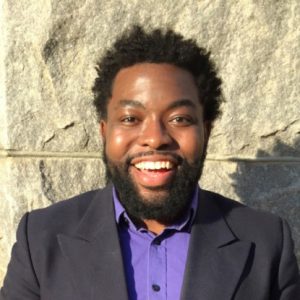 Jadrian Tarver a native of Haines City, Florida, has maintained an active roster as a conductor, clinician, composer, and recitalist and has soloed and conducted in many performances. He has performed with Atlanta Opera, Peach State Opera, Capitol City Opera Company, and Michigan State University Opera and Opera Grand Rapids. Operatic roles include Germont in La Traviata, the title role of Gianni Schicchi, Dr. Bartolo in Le nozze di Figaro, King Balthazar in Amahl and the Night Visitors, The Bonze in Madama Butterfly, and Marcello in La Boheme. Musical Theater roles include Mr. Lindquist in Little Night Music and the Duke/Dr. Carrasco/Night of Mirrors in Man of La Mancha.
In addition to performing, he is an advocate for musicians of color. He established an independent publishing company, Indigo Press LLP, which focuses on publishing the works of underrepresented composers of color. In a similar vein, he curated the Sankofa Recital Series, a vocal artist collaborative that brings awareness to the music of African diasporic composers. While as a doctoral candidate a Michigan State University, he was appointed project manager of Diversity, Equity, Inclusion and Belonging (DEIB) for the Wharton Center for the Performing Arts and the College of Music. In this joint position as a student leader and project manager, he developed relationships across campus, cultivated programming, and activities important to Michigan State University’s community while advancing progress in diversity, equity, inclusion, and belonging.
Mr. Tarver holds the Bachelor of Arts in Music Education from Bethune-Cookman University, the Master of Music degree in Vocal Performance from Georgia State University, and a Doctoral Doctor of Musical Arts in Performance from Michigan State University.
 Dr. Meg Stohlmann is the director of choral and vocal studies at Gonzaga University where she conducts the Glee Club, Concert Choir and Chamber Singers. In addition, Meg also serves as the director of the Spokane Symphony Chorale. Most recently, she served as assistant professor of choral music education in the Hayes School of Music at Appalachian State University in North Carolina. There she conducted the Appalachian Glee Club, Appalachian Chorale, Appalachian Youth Chorale, and mentored many pre-service music educators. Dr. Stohlmann is an active member of the American Choral Directors Association and serves on the Northwest region’s board. She was also selected as one of six conductors to participate in the ACDA International Conductor’s Exchange program. She will host a conductor from Germany and travel to Germany in the summer of 2023 to represent the United States. Originally from Santa Rosa, California, Meg taught choir and guitar at the middle and high school level in Lexington, KY for six years and conducted the Danville Children’s Choir. Her children’s choir and high school advanced women’s choirs performed at the Kentucky Music Educators State Conference in 2014 and 2015, respectively. She earned her Doctoral of Musical Arts Degree at the University of Washington and Masters degree in Voice Performance and Choral Conducting from the University of Kentucky. A graduate of the United States Air Force Academy, Meg also served on active duty in the Air Force for 5 years in Arizona, Korea and Germany. She separated from the military in 2004 to pursue a second bachelor’s degree in Music Education at Sonoma State University. Meg’s lifelong love of choral music began as a charter member of the Santa Rosa Children’s Chorus where she sang for over 10 years and credits with her decision to make music education her career.
The Chorale enjoys a dedicated volunteer base of over 80 singers from all across the metro Spokane area; including many who commute from Coeur d’Alene, Davenport, Sandpoint, Pullman, and many other locations. These musicians participate in the over 100 hours of volunteer rehearsal and performance time required for each concert season. The professions of these volunteers are varied and include music educators, church choir directors, opera and theater performers, doctors, nurses, realtors, salesmen, homemakers, and many others who come together to share a love of singing.
Bag Policy
All bags (with the exception of clutches 6 1/2 by 4 1/2 inches) are subject to visual inspection by venue security.
Large bags are not allowed in The Fox, and must be checked in our Coat Check (located in the North Gallery) for the duration of the event.
Programs are subject to change
Cancellation Policy
All sales are final and nonrefundable.
