Abrami, Sarasate, and Moszkowski

By Sam Miller | June 1, 2026

Esther Abrami’s “Transmission”
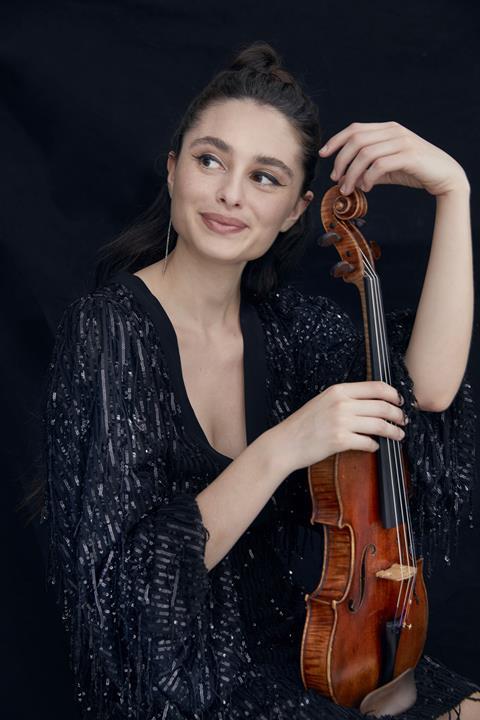
On April 25th, 2025, Esther Abrami released an album titled “Women,” in which she played a collection of lesser known pieces by female composers. Abrami, who turned 29 last October, picked up her grandmother’s violin at the young age of 3, and fell in love with the instrument. Her grandmother had given up the violin after she got married, and Esther, “took where she left and kept going” (Gordemer). Today, the young violinist is an inspiration, encouraging young girls around the world to pick up the violin and pursue music. Her recent album, “Women,” seeks to do just that. By curating a collection of pieces composed by women, “Women” opens the door to what she calls the “hidden treasures” of classical music. The album includes works by many prominent female composers such as Ilse Weber and Hildegard Von Bingen. However, the final piece in the collection, “Transmission”, is composed by Abrami herself as a love letter to her grandmother.

  • Length: 4 minutes
  • Structure & sound: At only 4 minutes, Transmission is short but incredibly sweet. A simple and warm melodic line carries the listener through the piece. There’s not too much to be said about the work, it’s simply a wonderful and heartfelt composition that is a joy to listen to.

I love listening to this piece just to take a short break from my day. It’s a nice refresher to get you back on your feet.

The performance I have for you today is by Abrami herself with the Bournemouth Symphony Orchestra in London’s Royal Albert Hall.

Hampton, Olivia. “Violinist Esther Abrami uncovers ‘hidden treasure’ of music by women.” NPR, NPR, 28 April 2025, https://www.npr.org/2025/04/28/nx-s1-5286308/violinist-esther-abrami-female-composers-new-album. Accessed 23 May 2026.

Sarasate’s Carmen Fantasy

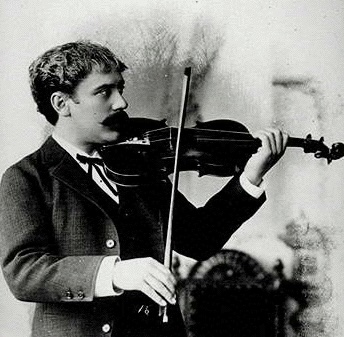
Composed in 1881, Sarasate’s Carmen Fantasy for Violin and Orchestra is the epitome of virtuosity. Inspired by the world-famous opera of the same name, the Carmen fantasy takes the famous themes and melodies from the opera and projects them on the violinist, creating a stunning work that challenges the very best violinists in the world today. The late 1880s was an exciting time for violin music. Composers like Ysaye, Kreisler, and Sarasate were composing incredible works that showed off the violin in new ways. These pieces were not composed with the concert hall in mind; Instead, these virtuosic compositions were made for salons and studios. In short, instead of the grand violin concertos by Brahms, Beethoven, and Tchaikovsky, these composers created short, yet virtuosic works that were designed to show off the violinist’s skill while also presenting a musical challenge. Furthermore, one of the key aspects of Sarasate’s works is that he gives plenty of wiggle room to the soloist to make the piece their own. Tempi and dynamics are often very loose, and the inherent “mood” of the piece is occasionally left ambiguous. The result of this is that no two performer’s interpretations are the same. Differing interpretations are nothing new in classical music, but Sarasate’s compositional style really exacerbates the difference between violinists. Sarasate’s Carmen Fantasy is a textbook example of this philosophy. 

  • Length: 13 minutes
  • Structure: This piece is composed of 5 movements
  • Sound: The Carmen Fantasy is kind of like an 1880s musical mashup. It takes the biggest hits from Carmen and turns it into a really awesome medley for the solo violin and piano. The composer utilizes the basic themes, then builds on them with variations, each with a new virtuosic challenge. The result is a work that’s both compelling musically and also has lots of room for fireworks that make you go “wow.”  The piece begins with a short introduction in the form of “Aragonaise” from act four. This is followed by the well known “Habanera” from act one and a brief interlude. Following this interlude is a play on “Seguidilla.” After “Seguidilla” is the famous “Gypsy Dance” section that closes out the piece.

This piece is a great listen while driving or doing work around the house. I’m almost confident there’ll be at least one tune that you’ll recognize.

The performance I have for you today is by living legend Augustin Hadelich with pianist Joyce Yang.

Counts, Jeff. “Sarasate: Fantasy on Bizet’s Carmen.” Utah Symphony, Utah Symphony, 4 April 2022, https://utahsymphony.org/explore/2022/04/sarasate-fantasy-on-bizets-carmen/. Accessed 24 May 2026.

Moszkowski Piano Concerto in E Major

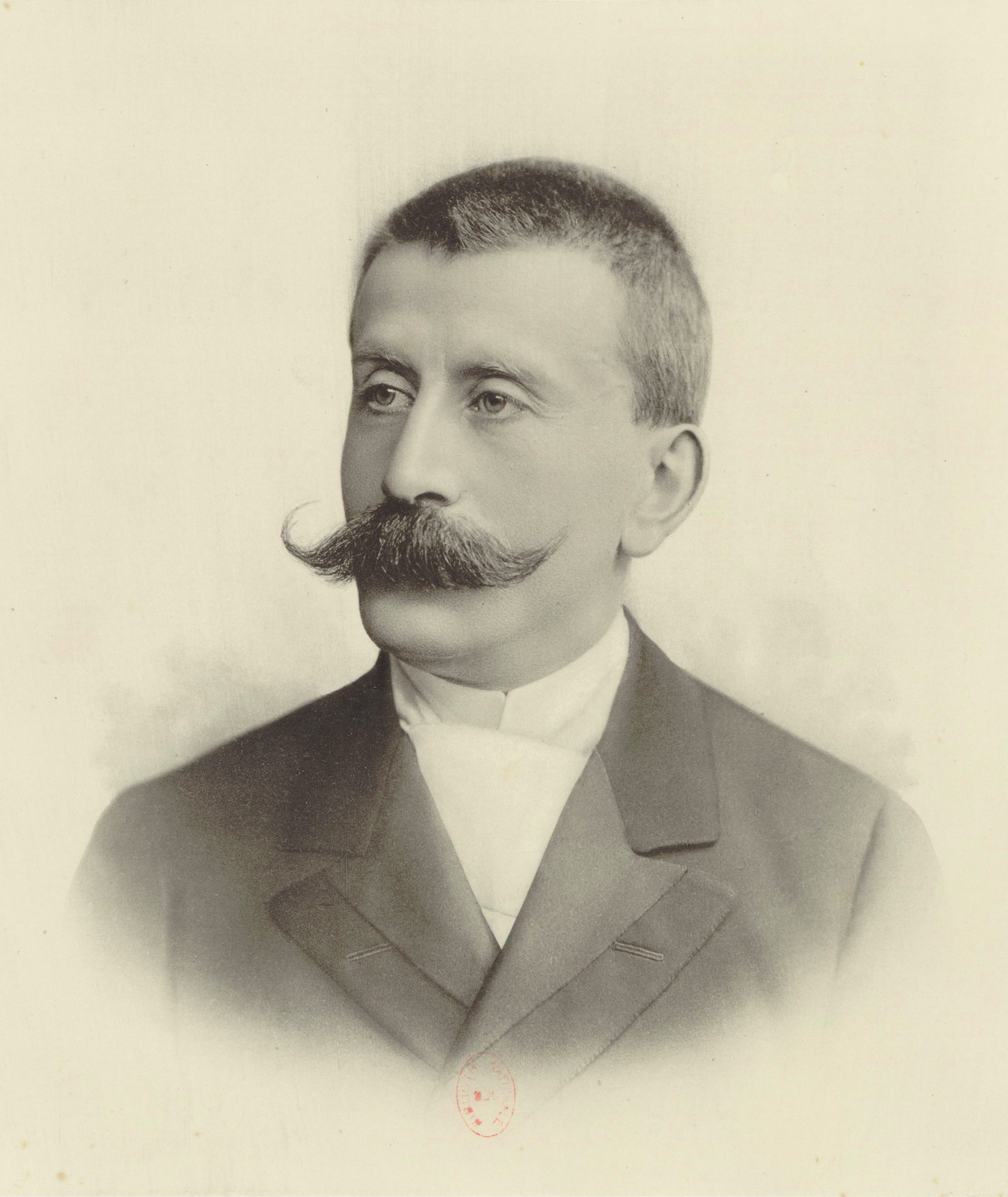
Composed in 1883, Moszkowski’s brilliant 2nd piano concerto lives and breathes romanticism. Moritz Moszkowski is one of the more underrated composers in the classical music canon. Born in 1854 to an affluent Jewish family in Breslau, Poland, Moszkowski was exposed to music from a young age and began formal training in Dresden as early as 1865. He would train under even more prestigious educators and musicians when his family moved to Berlin. At the age of 17, he would actually become a member of the faculty at Neue Akademie der Tonkunst in Berlin, where his composing journey would begin. Starting small with a simple mazurka, the young composer would soon grow to compose two large-scale piano concertos and one violin concerto. The violin concerto, which was premiered by Emilie Sauret, saw much success, and the 2nd piano concerto received a similar reception, being performed with major orchestras across the continent. The 1st piano concerto was denounced by Moszkowski, with the composer declaring, “it [the piano concerto] is most convenient for making my piano stool higher when I am engaged in studying better works (Predota). Despite the fame of the first two large-scale works mentioned, Moszkowski was a victim to changing times and his own health complications. Beginning in the 1880s, the composer began to suffer from neuropathic problems that affected his ability to perform. In response, he shifted his musical practice to teaching, and found much success training young musicians across Europe. However, the final nail in the coffin for Moszkowski would be the advent of the 1st world war combined with the rise of modernism in music. Modernism rejected the old romantic principles of music and with them, its composers. Moszkowski would live the rest of his life in poverty before passing away in March of 1925 (Predota).
  • Length: 38 minutes
  • Structure: This piece is composed of 4 movements
  • Sound: Moszcowski’s 2nd piano is a hidden gem. The most famous of the composer’s works, it is an absolutely stunning melodic masterclass. The first movement, Moderato, is warm and full of melodies that show off the emotional range of the piano. The real crown jewel of this piece for me, however, is the beautiful second movement. Titled “Andante,” this movement is the slow movement of the piece and carries so much emotional weight. The movement has an absolutely gorgeous climax that I could listen to on repeat for hours. The third movement, Scherzo-Vivace, is connected to the second, but carries an entirely different tone. The heartfelt melodic lines are replaced with more lively ones which carry a more hopeful tone.The final movement, Allegro Deciso, carries the piece victoriously to the finish line.

I love listening to this piece, especially the second movement, while driving or working, but I find myself getting lost all too often in beautiful romantic melodies, of which this piece is full to the brim.

The performance I have for you today is by Markus Pawlik with the Polish National Radio Symphony Orchestra. As you know, I generally like to find live performances of the pieces I feature when I can, but unfortunately, because of this piece’s relative obscurity, the only full performance I could find is a video with the score on the screen. Nonetheless, I think the music is worth it.

Predota, Georg. “Remembering Moritz Moszkowski (1854-1925).” Interlude.HK, 4 March 2025, https://interlude.hk/moritz-moszkowski-1854-1925-after-chopin-moszkowski-best-understands-how-to-write-for-the-piano/. Accessed 25 May 2026.

Read More Blogs and Get Your Dose of Classical Music

About Sam

Samuel “Sam” Miller is a 12th grade student at Gonzaga Preparatory school who writes and distributes a weekly classical music blog that shares different classical songs and explores their background with his teachers and peers. He is an avid violinist studying under Mateusz Wolski, and an enthusiastic member of the Spokane Youth Symphony. Samuel started this project to pursue and share his passion for classical music with others. In his free time, Sam enjoys practicing violin, going to symphony concerts, playing tennis, hanging out with friends, video games, and spending time with his family.